


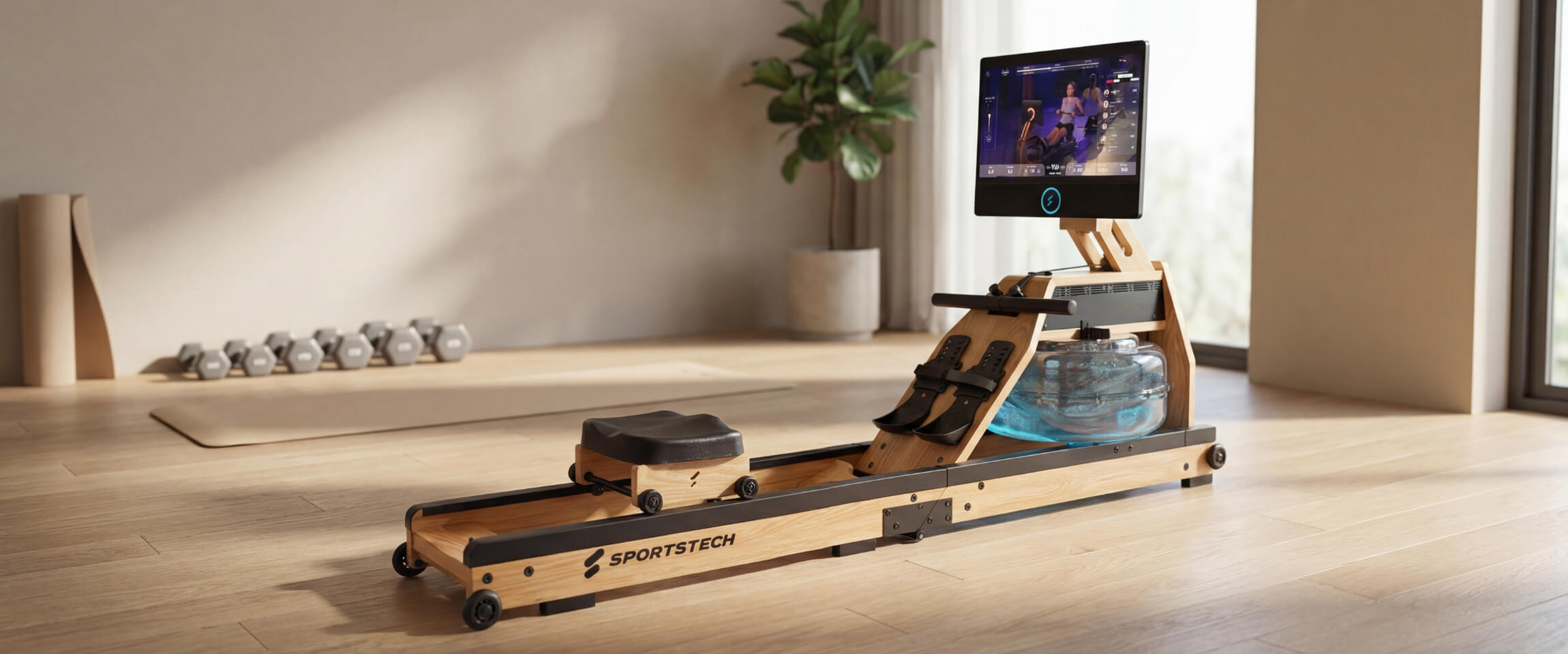
When it comes to indoor rowing, many buyers first consider price, design, or smart features. But resistance is the decisive factor that determines the rowing feel, long-term comfort, noise level, and even training consistency.
On the German market – where most rowing machines are used at home and often in apartments – the choice between water, air, or magnetic resistance is far from insignificant. It directly affects everyday use: enjoyment of training, motivation, noise levels, integration into the living space, and compatibility with guided workouts.
Those who understand how the individual resistance systems work make a significantly better purchasing decision – and avoid a common mistake: buying a machine that impresses on paper but does not suit their lifestyle.
What is resistance really used for on a rowing machine?
A widespread misconception: Resistance only makes the workout "harder". In fact, it plays a central role in a rowing machine for:
- the progression of the load
- the biomechanical fluidity of the movement
- the distribution of force between the legs, back, and arms
- the ability to maintain a constant pace over a longer period
In rowing, the movement is sequential:
Leg drive → core activation → arm pull.
Unsuitable resistance can disrupt this movement chain, cause jerky movements, reduce training efficiency, and make the workout unpleasant – especially with regular home use.
Water resistance: Realism through natural dynamics
How it works
With water resistance, a paddle rotates in a tank filled with water. The resistance is created by the displacement of the water.
The harder you pull, the higher the resistance automatically becomes. There is no classic electronic setting – the intensity depends directly on your exertion.
Training feel
- Very fluid movement
- Natural progression
- Even resistance throughout the entire pull phase
- Very realistic rowing feel
This technology is considered particularly authentic – especially for people with experience in outdoor rowing.
Advantages
- Immersive training experience
- Automatic adjustment of resistance
- Enjoyable cardio workout
- Ideal for longer sessions
Disadvantages
- Perceptible water noise
- Tank maintenance required
- Larger space requirements
- Less precise resistance control
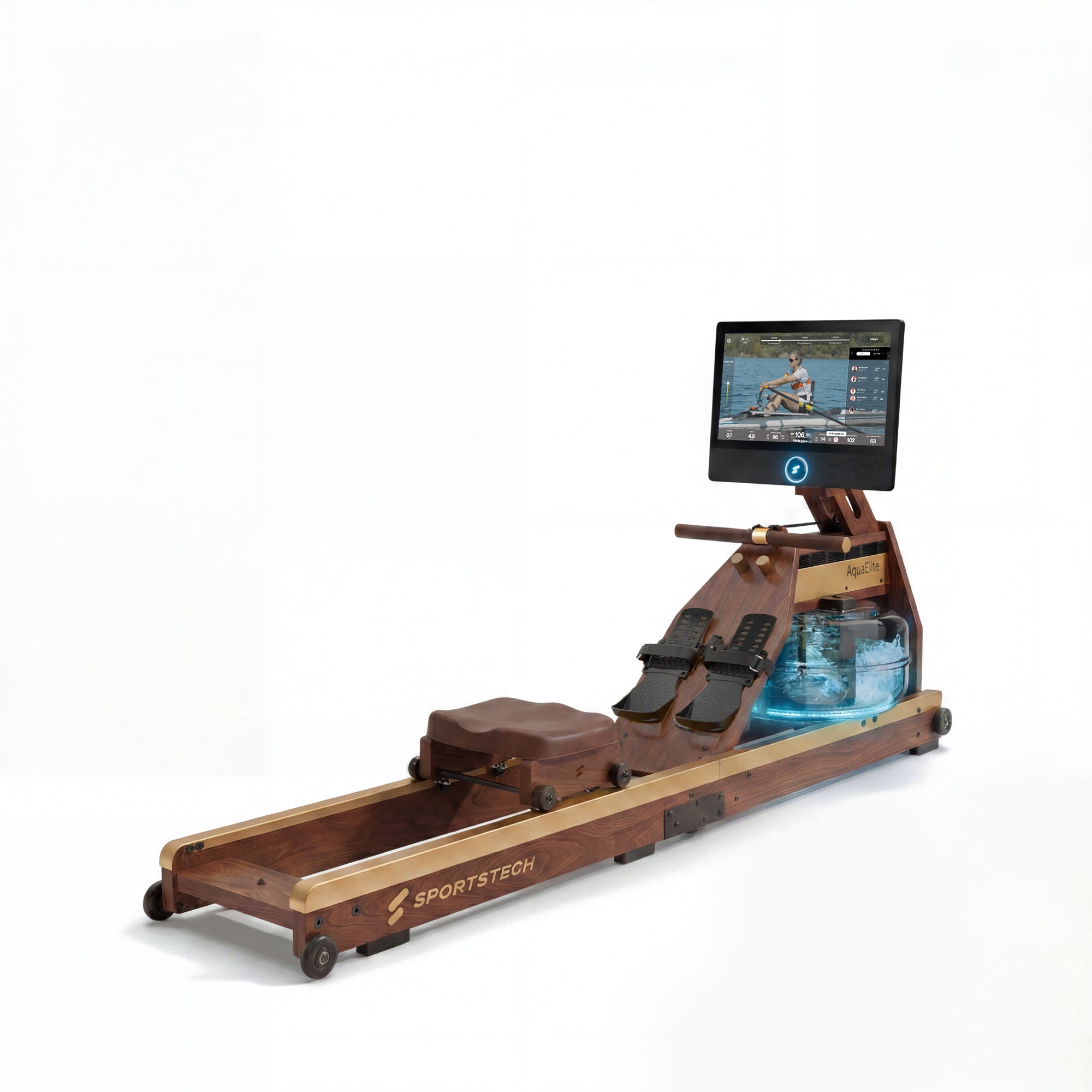
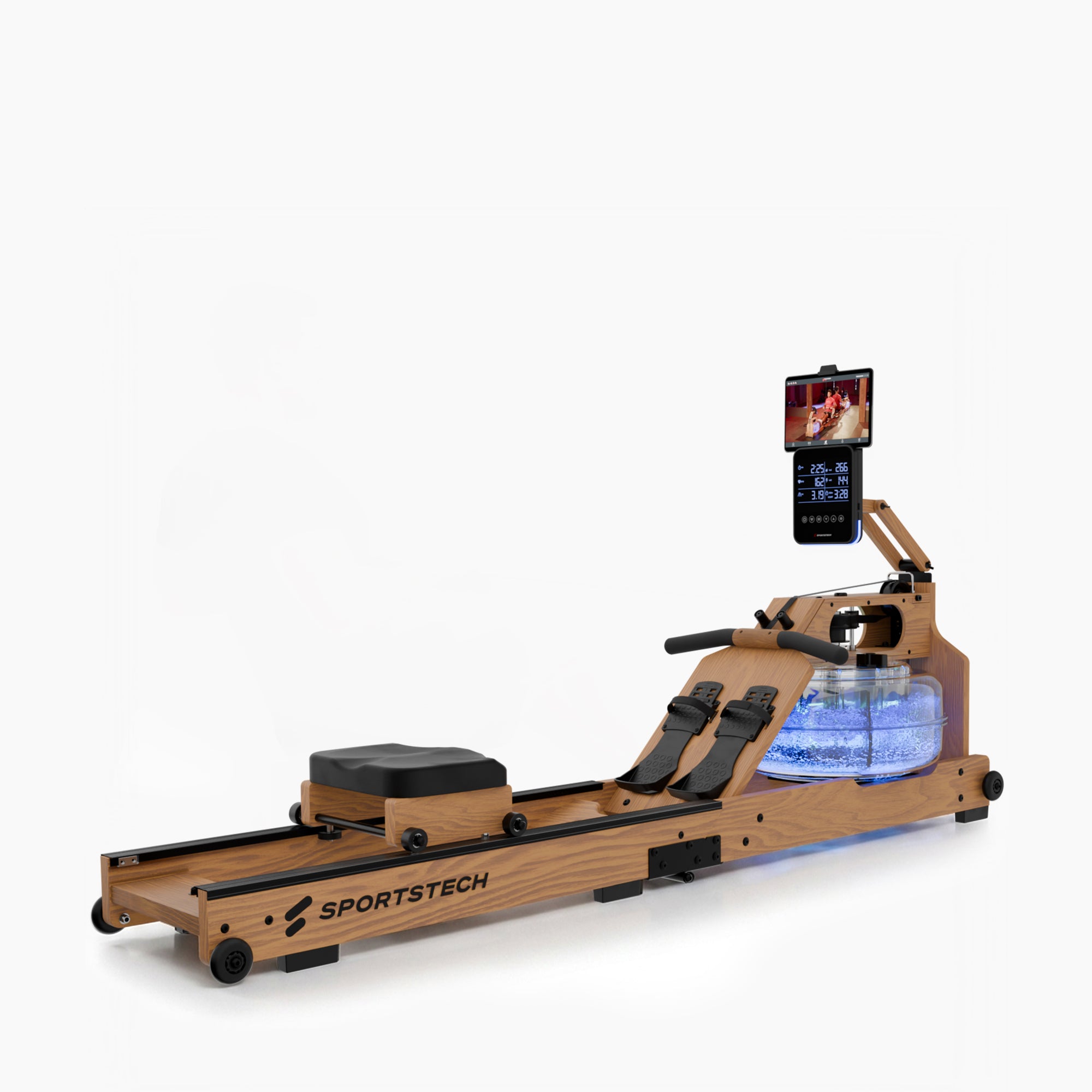
Examples of Sportstech water rowing machines
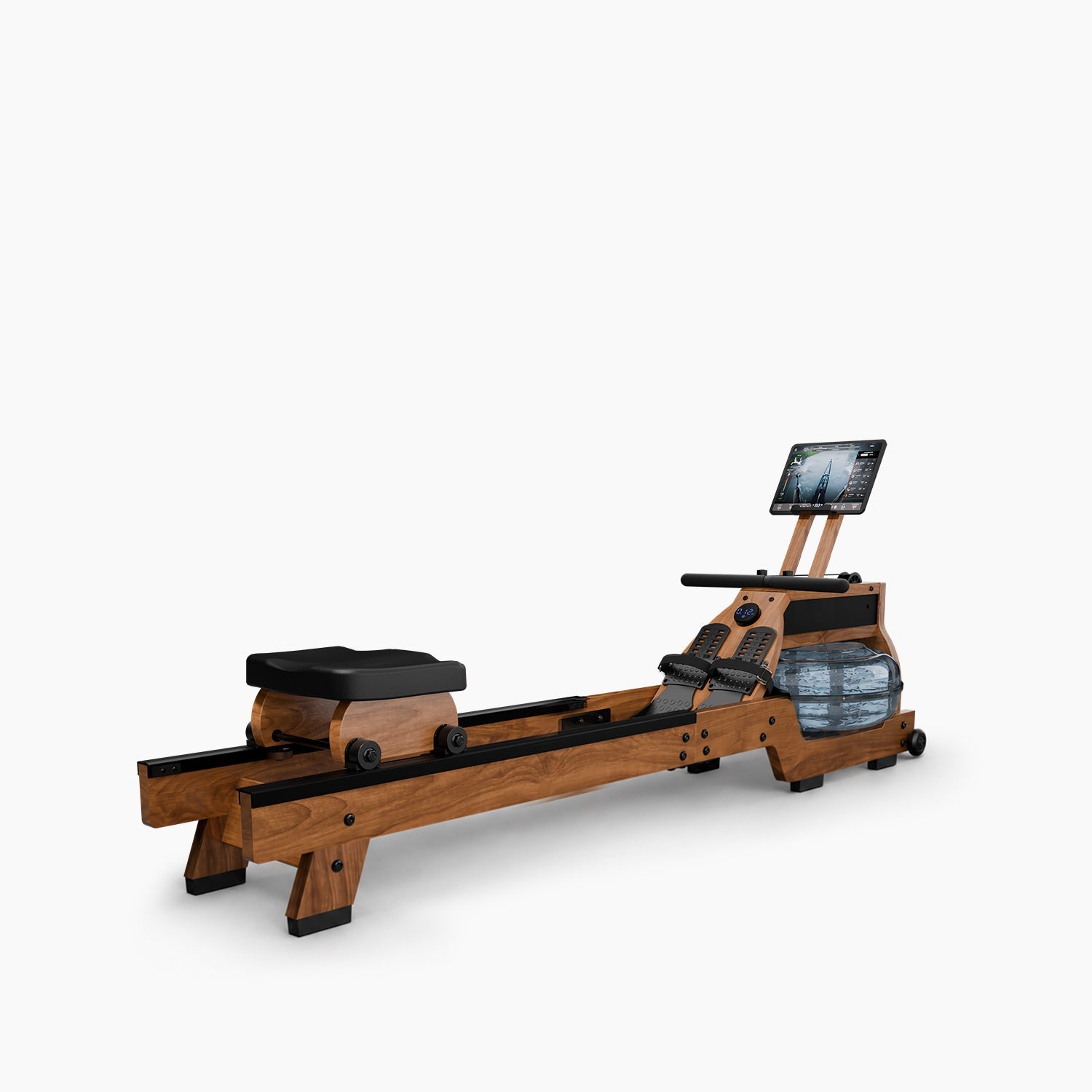
The Sportstech WRX1000 combines an elegant wooden design with modern technology, an LED water tank, a folding function, and app connectivity via Sportstech Live.
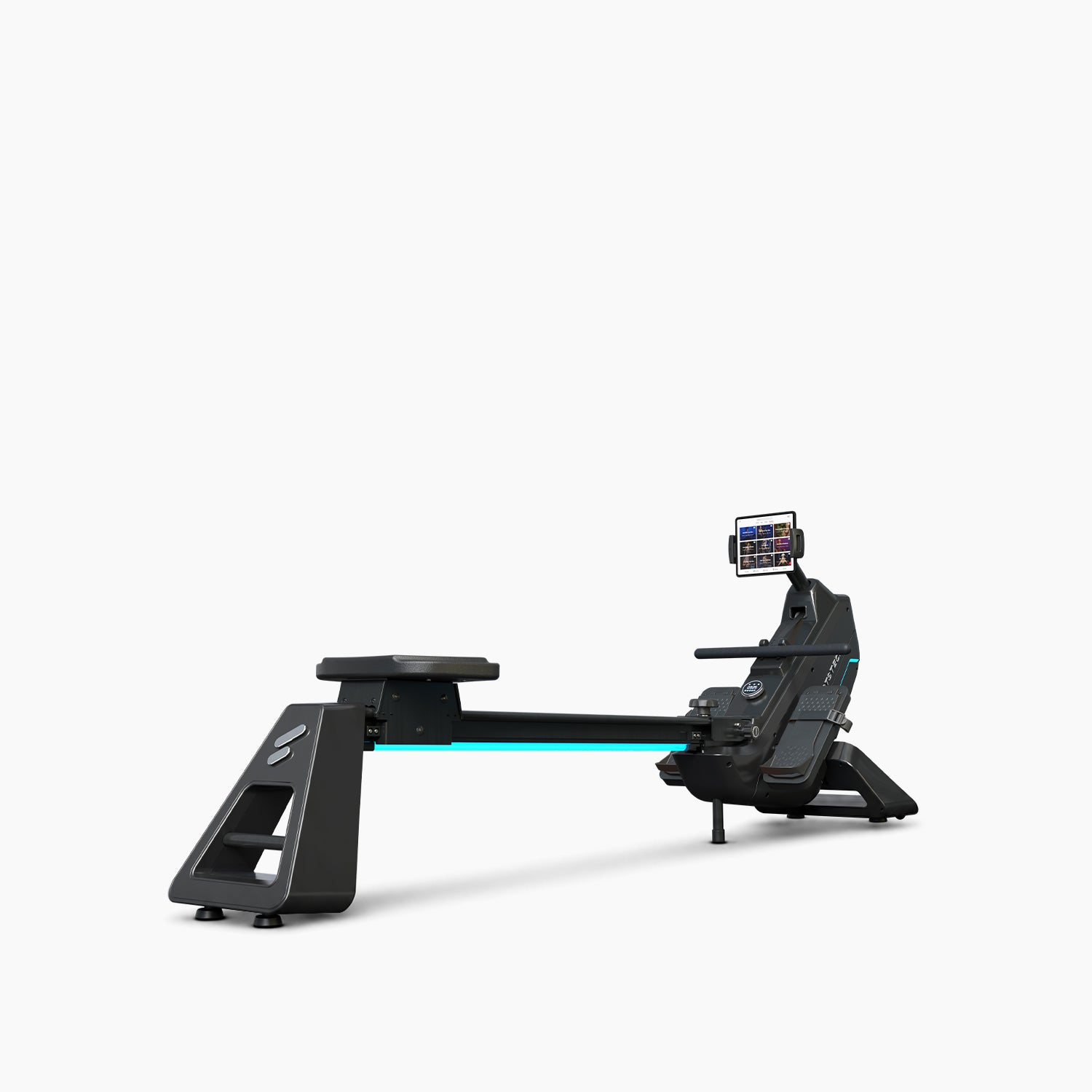
The Sportstech AquaElite Pro offers a dynamic LED tank, a 21.5″ HD touch display, and a 3-in-1 water resistance system for a particularly immersive workout.
Air resistance: Intensity and performance orientation
Operating principle
An internal fan blade creates resistance. The faster it rotates, the higher the resistance. The faster you row, the more demanding the workout becomes.
Training feel
- Very dynamic
- Instant resistance
- High intensity from the very first strokes
Advantages
- Maximum responsiveness
- Consistent performance data
- Theoretically unlimited resistance
Disadvantages in home use
- Significantly higher noise level
- Less suitable for apartments
- Design usually performance-oriented rather than home-friendly
Typical use
Air rowing machines are predominantly used:
- in the gym
- by experienced athletes
- in performance-oriented training
In German households, they are less common than magnetic or water-based models.
Magnetic resistance: Quiet, precise, and controllable
How it works
Magnets act on a flywheel. The resistance is regulated by bringing the magnets closer or moving them further away.
Characteristics:
- Adjustable resistance levels
- Control via console or rotary knob
- Constant and stable load
Training feel
- Very even movement
- Homogeneous resistance
- No sudden resistance peaks
- High training stability
Advantages in the home
- Very quiet
- Ideal for apartments
- Almost no maintenance required
- Precise intensity control
- Optimal for structured training programs
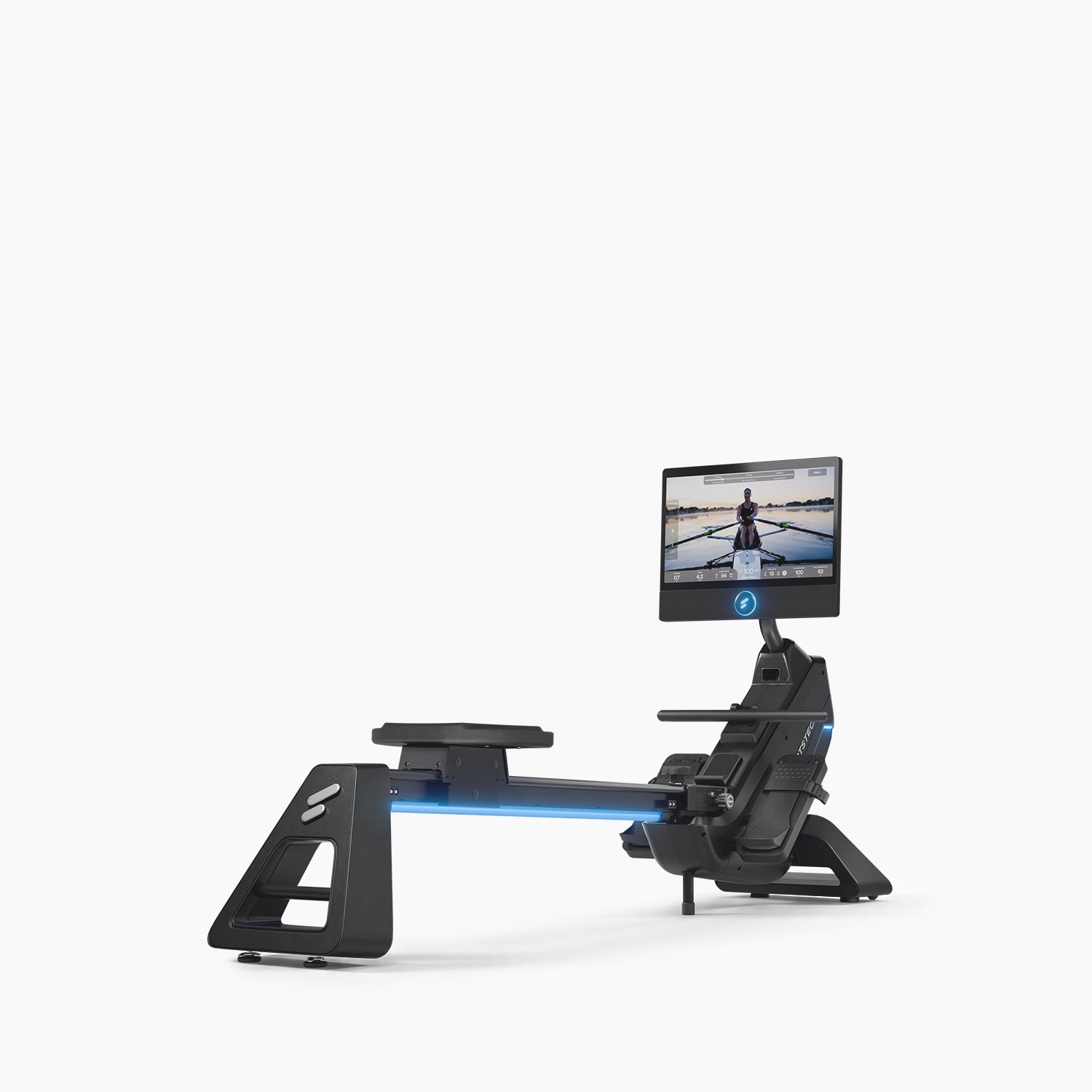
Example: Magnetic rowing machine
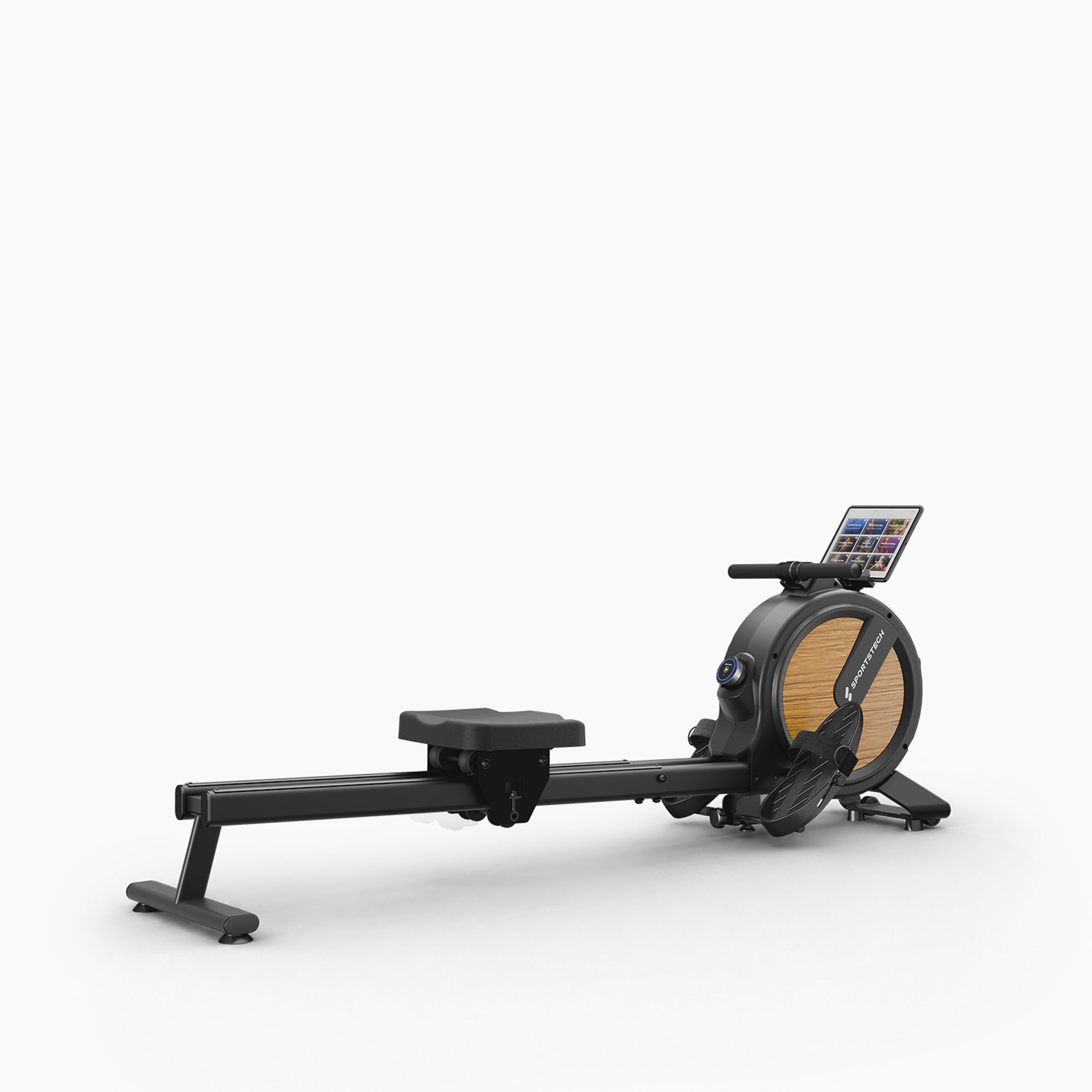
The Sportstech PROwer features an electromagnetic braking system with 32 resistance levels, a double aluminum rail, an ergonomic seat, and Bluetooth connectivity.
It is particularly suitable for users who want to train in a structured, quiet, and long-term measurable way.
A common misunderstanding
Magnetic resistance is sometimes perceived as less "realistic". In fact, it enables:
- better technical control
- measurable progression
- perfect repeatability of training sessions
For many users in Germany, it is the most sustainable solution in the long term.
Hybrid resistance: Why it is increasingly in demand
Hybrid solutions combine:
- the natural dynamics of water or air
- with the control and low noise levels of magnetic systems
Even though not every model is mechanically hybrid, modern rowing machines use:
- optimized flywheels
- progressive resistance curves
- intelligent software integration
The goal is a realistic feel with as low a noise level as possible.
The role of apps in modern rowing training
Today, resistance alone is no longer enough to stay motivated in the long term. Users expect:
- Guided programs
- Clear training goals
- Precise progress tracking
- Advanced performance metrics
Why magnetic resistance harmonizes particularly well with apps
Magnetic systems enable:
- Exact resistance levels
- Programmed intervals
- Reproducible training stimuli
This allows them to integrate optimally with:
The apps record, among other things, watts, stroke rate, 500-m split, heart rate, and performance development – and turn the rowing machine into an intelligent training system.
Materials, design, and home integration
Aluminum
- Light
- Robust
- Modern and minimalist
- Easy to move
Common in magnetic models such as the PROwer.
Wood
- Warm, homey appearance
- Strong visual presence
- Typical for water rowing machines
- Magnetic → almost silent
- Water → moderate noise
- Air → clearly audible
- Beginners → Magnetic resistance
- Regular users → Magnetic with app connectivity
- Fans of realistic dynamics → Water resistance
- Apartment / home office → Magnetic
Particularly relevant when the machine is in the living room
Noise level: A decisive factor in Germany
This is why magnetic resistance dominates home use in Germany.
Which type of resistance suits which user?
The best rowing machine is not the most impressive on the first day – but the one that is used regularly.
Conclusion: Resistance as the key to the right decision
Those who understand the differences between water, air, and magnetic resistance look behind the marketing and make an informed choice.
Noise level, control, training feel, connectivity, and design should be evaluated together.
The trend in the German market is clear: Fewer compromises, more intelligent product concepts, and better adaptation to everyday life.












Teilen:
Best Treadmill with Incline for Home Workouts
Create a sustainable home workout routine with a smart rowing machine