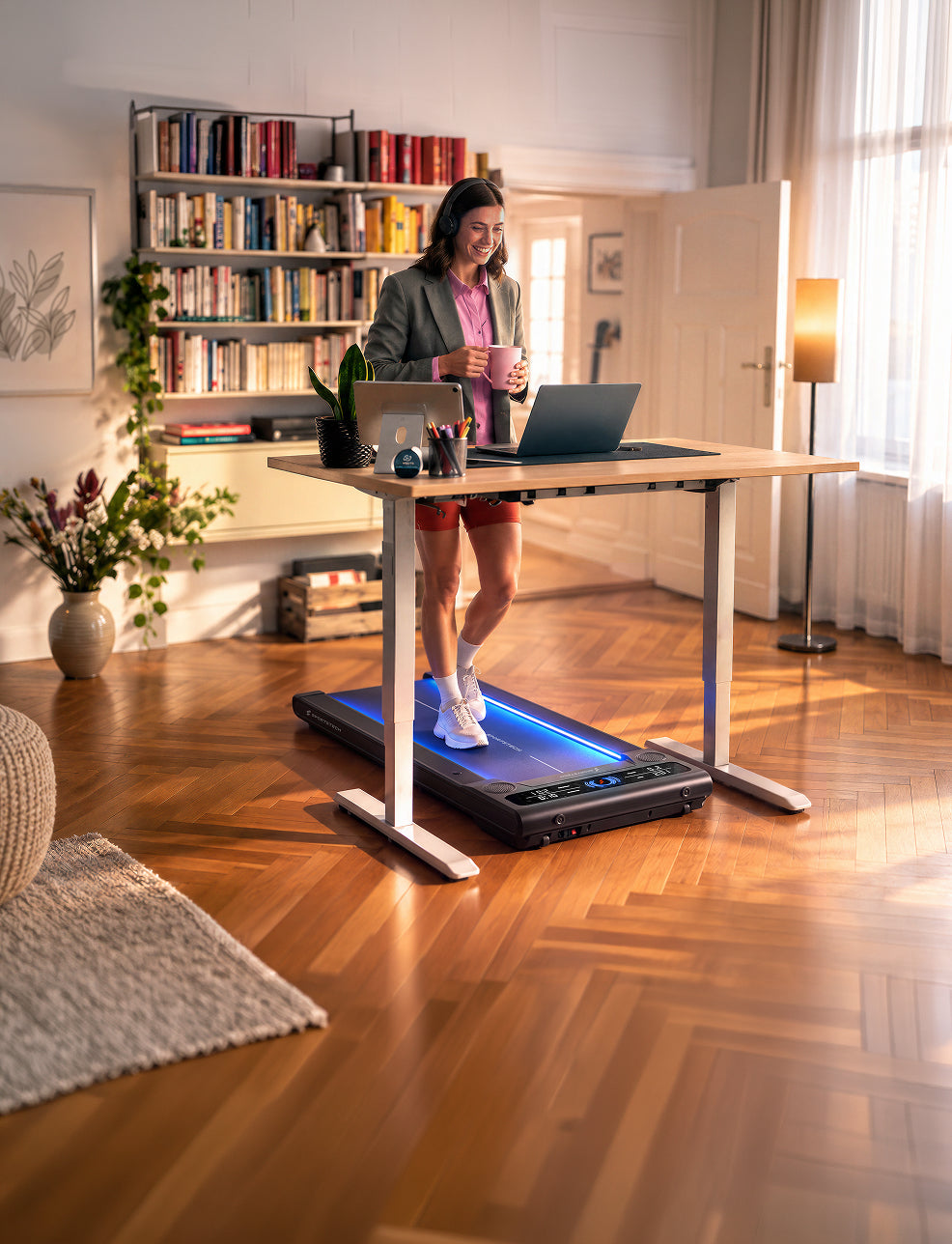
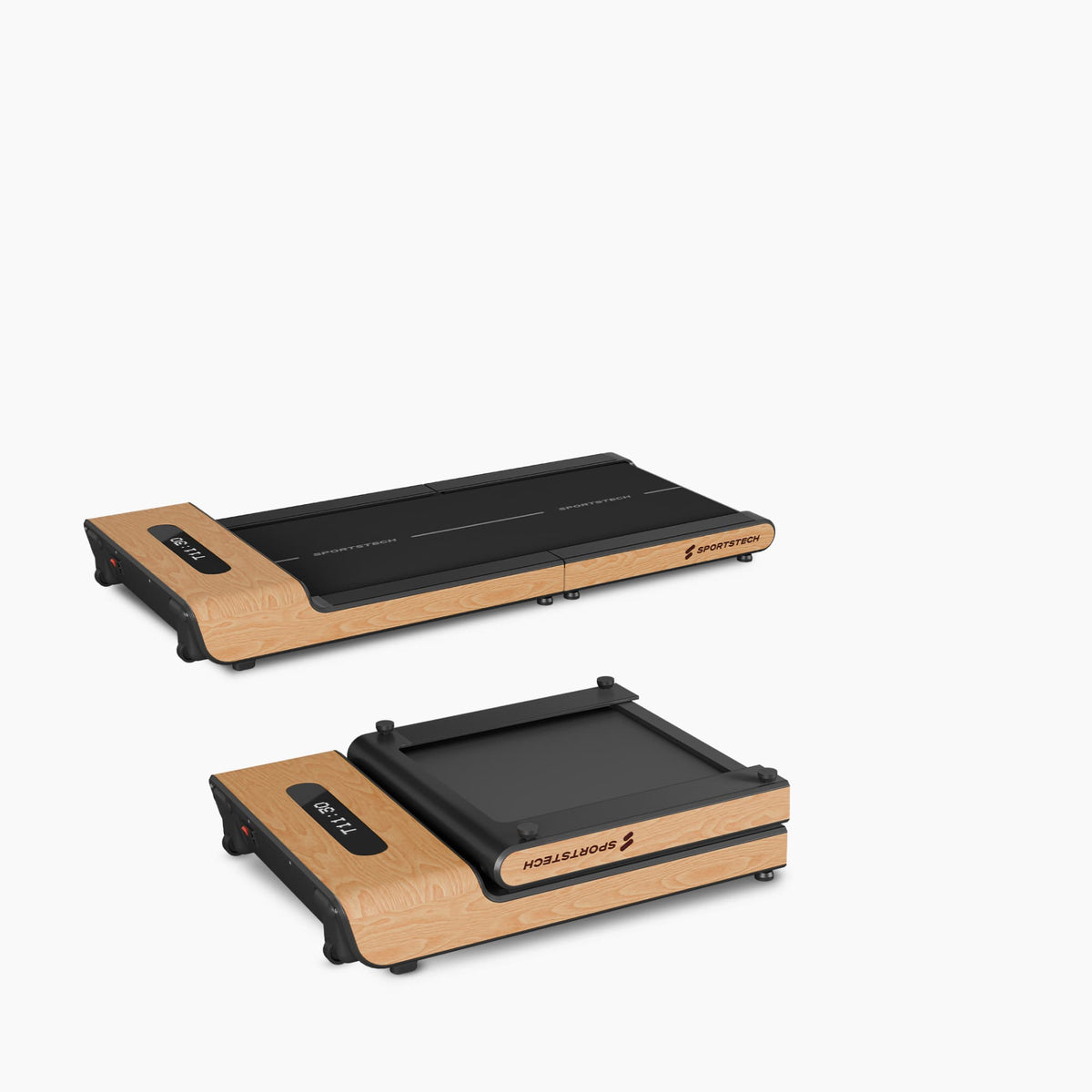
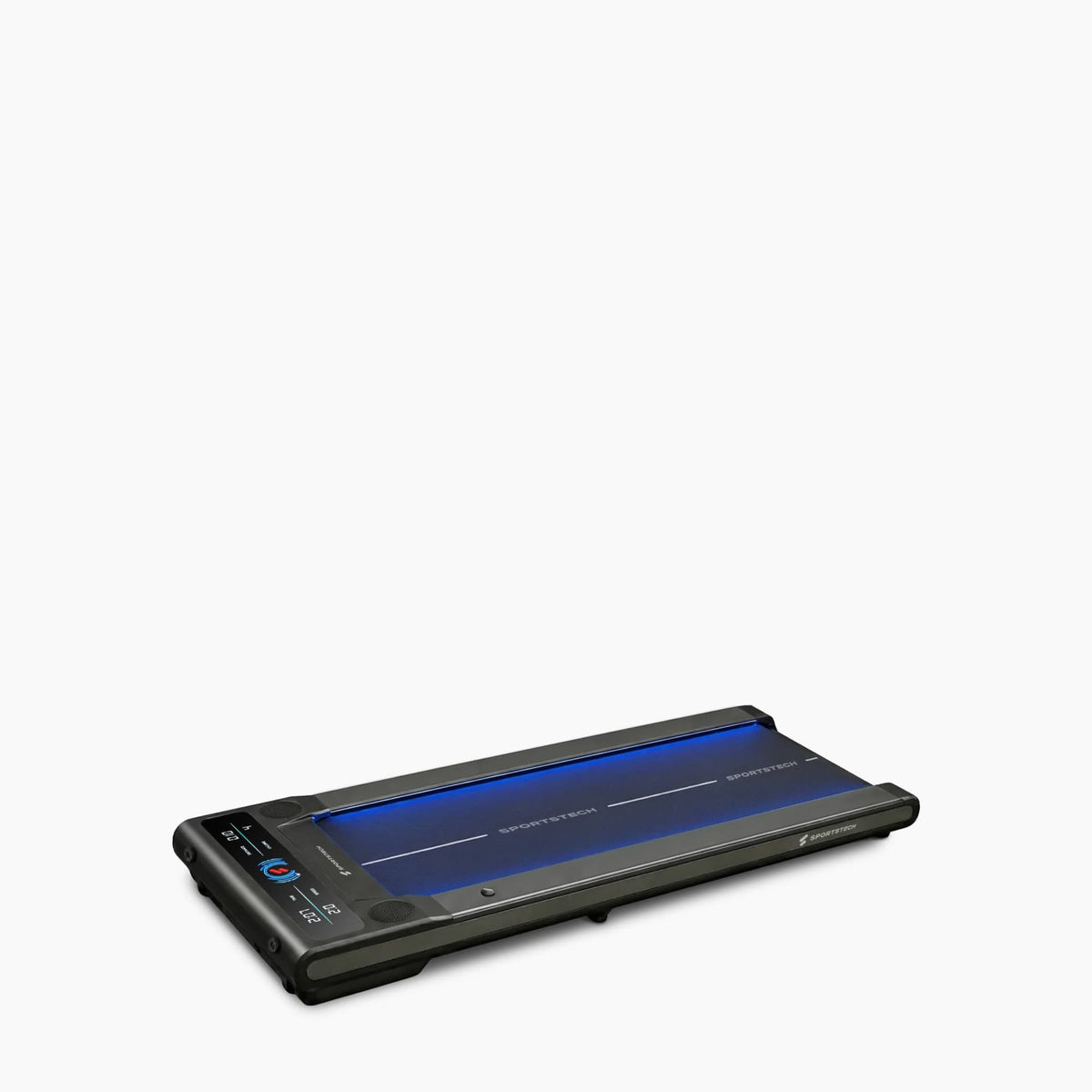
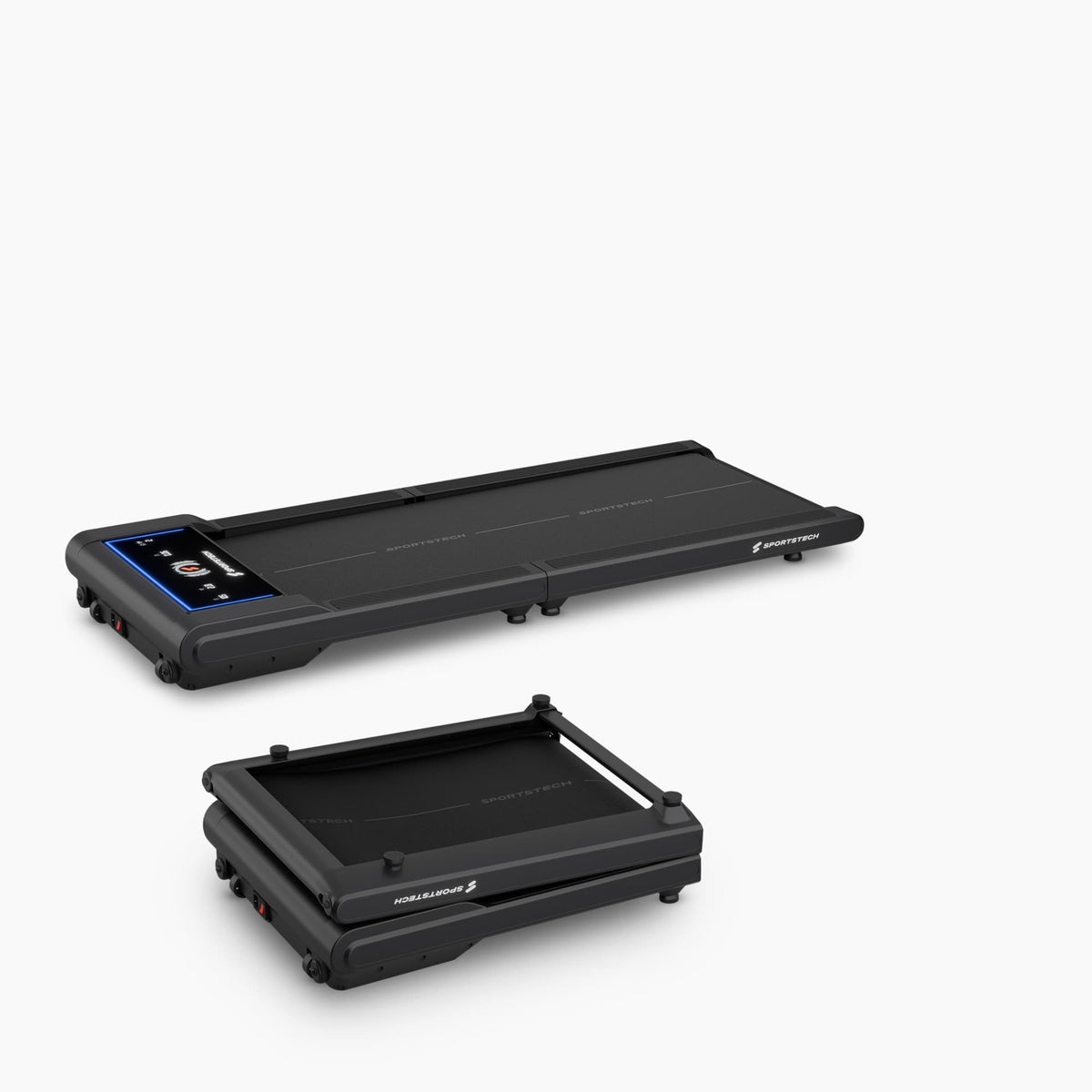
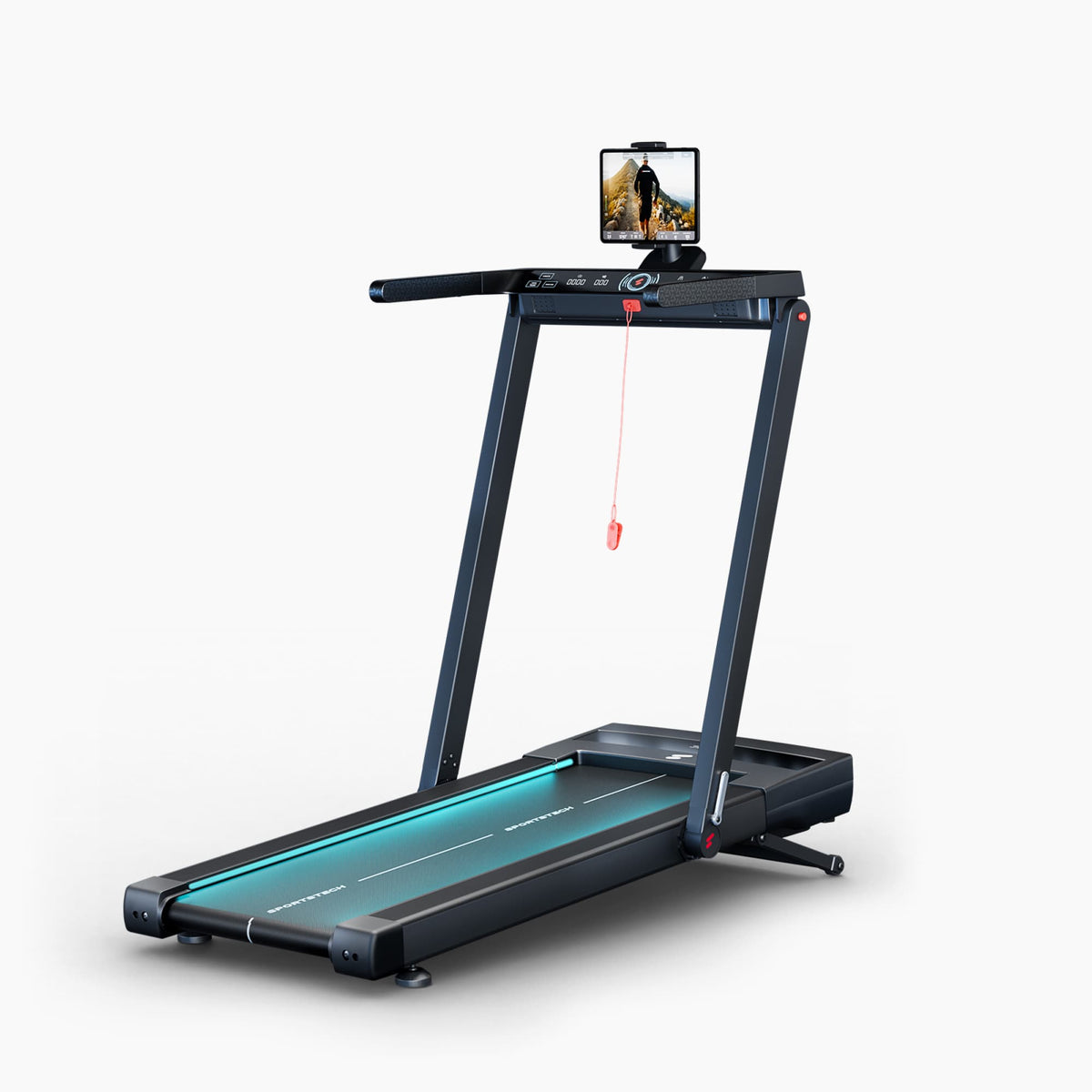
Running is not only the most natural form of movement, but also the most popular sport in Germany. With a treadmill, you can enjoy the benefits of straightforward endurance training at home, whether you're a beginner, intermediate or pro. Before you get started with versatile endurance training , however, you'll need to buy a treadmill. Which treadmills are right for you depends on several factors and considerations.
1. Size: Treadmills are available in different sizes. When choosing the right treadmill size, length and width aren't the only things that matter. If you plan to use your treadmill in a room with a low ceiling, the height of the running deck is also important to ensure there's enough clearance overhead. This is especially true for taller runners.
2. Running surface: A larger running surface generally makes running safer and more comfortable. After all, even in the heat of the moment during HIIT endurance training, it's hard to miss a step. If you have enough space, follow the basic rule: "the wider and longer, the better."
To help beginners enjoy a safe workout, we recommend a minimum width of 35 centimeters and a length of 110 centimeters. The F31s treadmill, for example, is a good treadmill for beginners. For runners over 1.80 meters tall, the running surface should be at least 50 centimeters wide and 145 centimeters long.
3. Motor power: A powerful motor is essential. In the long run, it's worth buying a treadmill with higher motor power. It allows you to run faster and supports your progress with endurance training. Important: When it comes to motor power, don't focus primarily on the maximum power, but on the continuous power. A continuous power of around 2 HP is recommended for most runners.
Runners with ambitious goals should choose a model with up to 3 HP. Another advantage: You can run faster on a machine with high continuous power. In addition, this type of treadmill lasts much longer for fitness training, as it doesn't run continuously at full capacity during intensive workouts. If you want a treadmill for a slow jog, a model that reaches a speed of approx. 8 km/h is sufficient.
4. Noise level: Treadmills make considerable noise while you run. If you want peace and quiet while working out and don't want to disturb your neighbors, you're generally better off choosing a more expensive model with a lower noise level. A high-quality floor mat provides additional noise reduction.
Good to know: At the same load, a powerful motor runs significantly more quietly than a weak one.
5. Build quality: While design is a matter of taste, high-quality construction is essential for a treadmill. A firm footing and securely installed parts are a must. In addition, there should ideally be no large gaps between the plastic parts.
The treadmill's weight is an important aspect of its build quality, as it contributes to stability during training.
Rule of thumb: The more intense your workouts and the heavier you are, the heavier the machine should be. A weight of 80 kilograms is ideal for most runners. If the heaviest user weighs more than 90 kilograms or particularly intense workouts are planned, the recommended weight is at least 100 kilograms.