


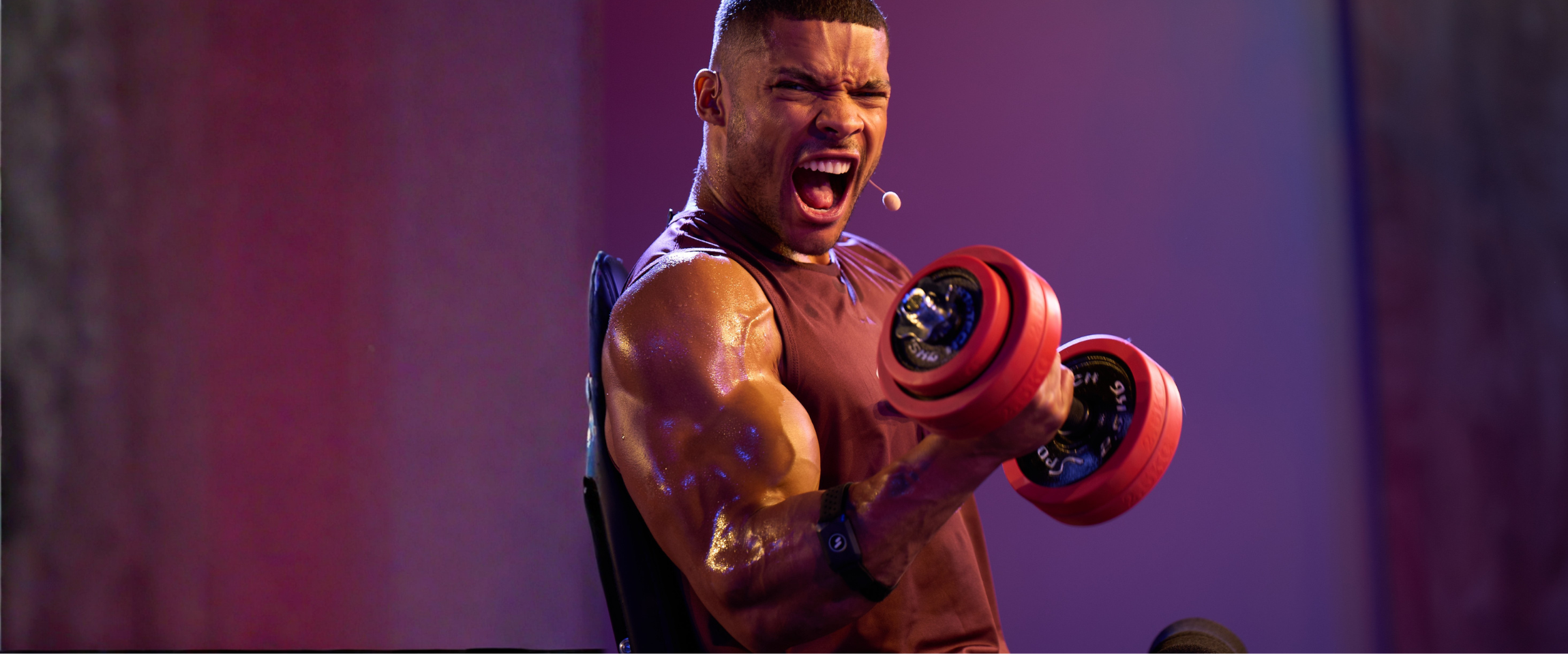
You start training motivated, push through your workouts, see initial progress – and then nothing happens anymore. No new stimuli, no visible changes, motivation drops, and thus welcome to the training plateau.
The problem here is rarely your effort, it is usually the system. Many people train a lot, but not specifically, and this is exactly where Progressive Overload comes into play. A principle that turns movement into progress and thus never lets your workouts become boring.
In this article, you will learn how to vary your training plan, break through plateaus, and achieve maximum gains at home with different workout variations.
Why you stagnate without the right strategy
Your body is a master of adaptation. If you train the same exercises with the same intensity, it adapts: muscles become more efficient, energy consumption decreases, progress stops. It is a natural protective reaction of your body, which is known as the plateau effect. Evolution has made us efficient, not tireless.
A meta-analysis in the Journal of Strength and Conditioning Research shows that training without variation leads to 70% lower strength gains after 4–6 weeks. It does not matter how much you train, but how specifically. Without Progressive Overload, you do not build new muscle, but merely ensure muscle maintenance. For home workout enthusiasts like you, this means: variation and increasing intensity are the key to muscle building.
5 ways to effectively vary your training
Workout variation must be clever, because it serves as a tool that always challenges your body anew. Here are 5 practical methods, optimized for the home gym with minimal equipment. Each variation sets new training stimuli, helps you avoid plateaus, and brings fresh momentum to your training.
1. Circuits for more dynamics and intensity
A particularly effective start is training, the so-called circuit training (Circuits). Instead of completing each exercise individually with long breaks, you combine several strength exercises into a fluid flow and bring more variety to your training.
Your heart rate remains constantly elevated, your body works continuously, and you achieve high training intensity in a short time. At the same time, more metabolic stress is created, which can support muscle building.
The Journal of Human Kinetics also scientifically proves that such training forms can enhance hormonal reactions in the body.
Especially in the home workout, circuit training is ideal: little time, hardly any equipment, and yet an effective full-body workout.
2. Vary the range of motion
The range of motion – i.e., the Range of Motion – has a decisive influence on the training stimulus. An exercise is not simply "right or wrong": depending on the execution, it can place different focuses and challenge the muscles in different ways.
Deep, controlled repetitions ensure greater muscle activation over the full range of motion and promote mobility, while shorter movements increase tension in the muscle and specifically address weak points.
With push-ups, for example, you can work with elevated hands (easier, more control) or elevated feet (more intense, more focus on upper chest/shoulders). Also with squats, an elevation under the heels helps to go deeper and enlarge the range of motion. This way, you set new stimuli without completely changing the exercise.
3. Specifically increase Time under Tension
If your training feels too easy, you do not necessarily need new exercises, but more control over the execution. This is exactly where the principle of Time Under Tension comes into play.
Here, you deliberately prolong the time in which your muscle is under tension. Instead of quickly "working through" repetitions, you perform them more slowly and controlled – for example, three seconds on the way down and one second on the way up – even a few repetitions feel significantly more challenging.
The result: Your muscles work more intensely, even without additional weight. You increase the training load without changing your setup, which is a central lever for Progressive Overload in the home workout.
4. Specifically use unilateral training
A particularly effective approach in the home workout is unilateral training, i.e., exercises in which you train only one side of the body at a time. In combination with suitable equipment like dumbbells, the training stimulus can be specifically increased and precisely controlled.
The advantage: Each side works in isolation, while your core has to stabilize more strongly. This makes the exercise significantly more intense, even with lower weight. This way, you set new training stimuli and simultaneously develop strength, balance, and coordination.
And if you currently have no equipment available, you can also increase the resistance using simple aids like a filled backpack.
5. Strategically use exercise rotations
For real progress in training, consistency is crucial. Your body needs time to adapt to a stimulus and become stronger.
Therefore, consciously stick to an exercise for 3–6 weeks and increase yourself within this time. More repetitions, better control, more tension. Only when you have exhausted the potential do you change the variation.
In this way, you combine the best of both worlds: progression for muscle building and variation for motivation.

Applying Progressive Overload correctly
If your training eventually feels boring, it is no coincidence – it is a sign that your body no longer has to learn anything new.
Progress is not created through more variety, but through targeted further development. This is exactly the idea behind Progressive Overload training: You do not do everything differently – you do the same thing better, harder, or more controlled.
Instead of constantly looking for new exercises, you work on the quality and intensity of your existing moves. Small changes make the difference and make boredom disappear:
- More repetitions → you get more out of each set
- More resistance → e.g., through additional weight or more tension
- More training volume → an additional stimulus per week, for example through more sets or sessions per week
- More Range of Motion → you enlarge the range of motion and activate the muscles more intensely
- More Time under Tension → you prolong the time in which the muscle is under tension
The effect: Your training no longer feels monotonous, but like clear progress. You notice that you are getting stronger, and that is exactly what keeps you motivated in the long term.
Progression criteria - When to move to the next phase?
You do not have to rigidly stick to the weekly indications. Every body develops differently, and therefore you should go at your own pace and only move to the next phase when strength and control are really there. Progress is not measured by the calendar, but by clean execution.
You are ready for Phase 2 when:
- you can stably hold the active hang for 2×45 seconds
- and manage 3×10–12 controlled Scap Pulls without momentum
You move towards Phase 3 when:
- you can cleanly perform Band Pull-ups 3×8 with a light band
- and master negative pull-ups 3×5 with a 5-second controlled downward phase
Strategically plan progression
Instead of improvising every training anew, it helps to think in clear phases. This automatically creates variety without you constantly needing new exercises.
A simple approach:
- Weeks 1–4: Focus on technique and clean execution
- Weeks 5–8: Increase intensity (more weight, more repetitions, more tension)
Just as crucial is making your progress visible:
- Regularly track weights, repetitions, and intensity
- Observe subjective perception of exertion (RPE)
- Consciously notice progress
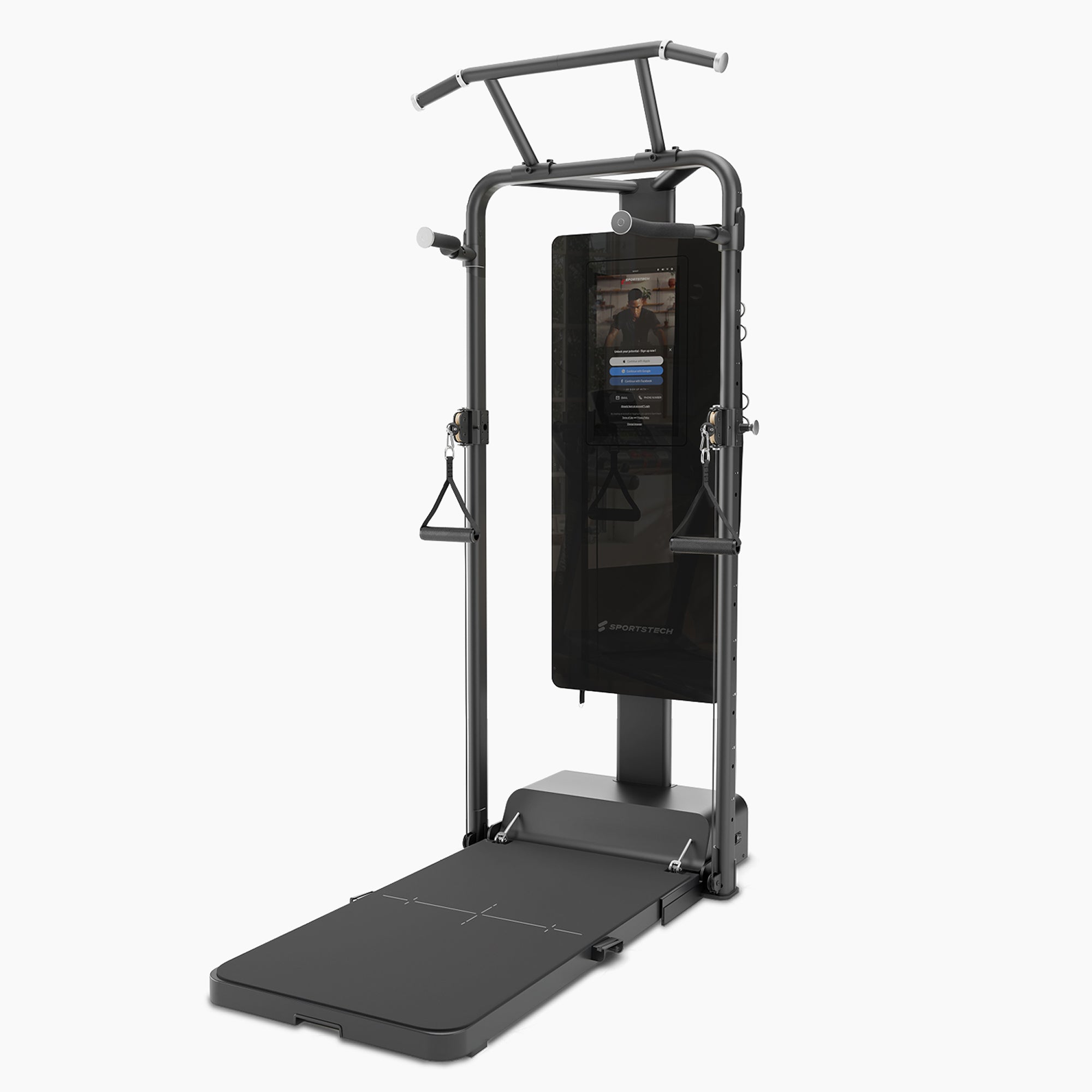
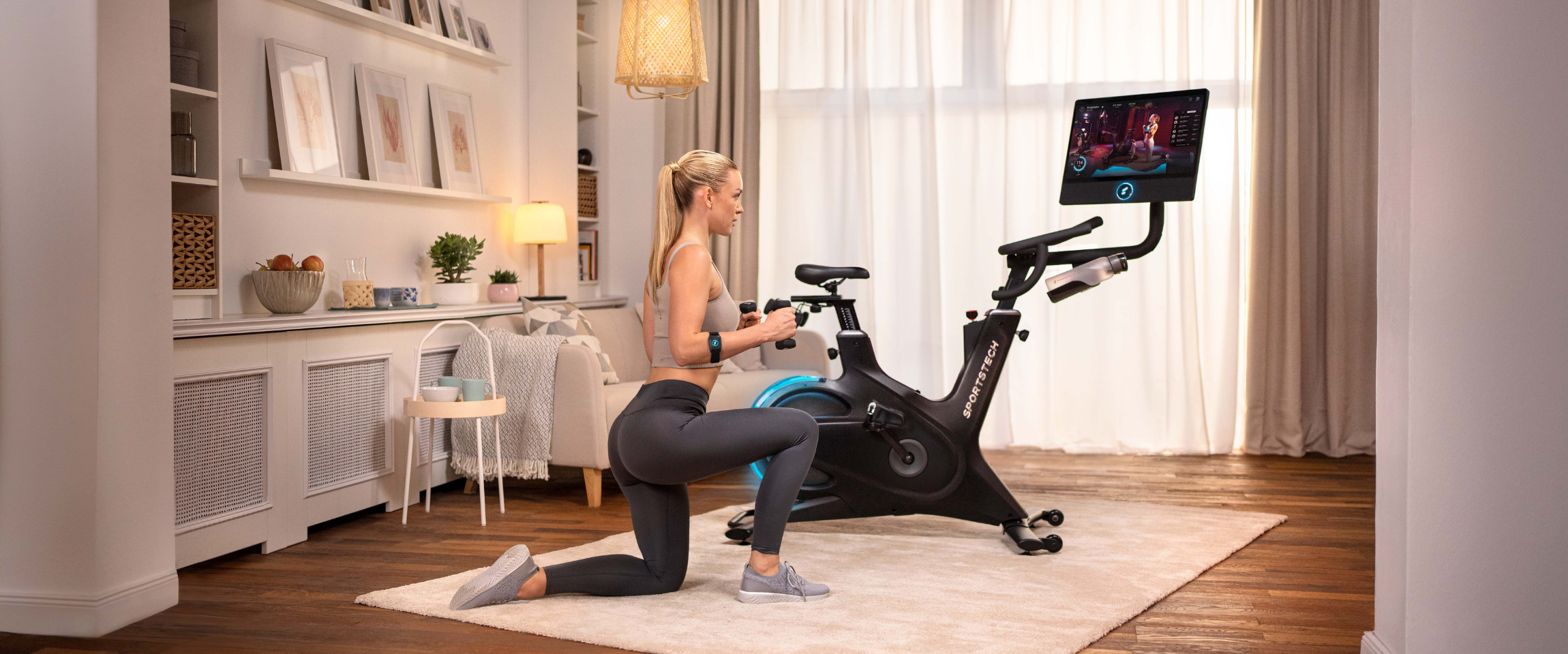
In this regard, additional tools and equipment can also strongly support you: With the sGym Pro you train as if with a personal trainer. This makes it easy to structure the training and track your progress. Dumbbells help you to adjust the weight easily, to always set new stimuli, and the Sportstech Live App can also be useful to keep an overview and organize your training in the long term.
Conclusion
Effective training does not need constant new exercises – it needs direction. If you know when to vary and when to consciously stick to it, your home workout will not only be more effective, but also more successful in the long term.
To additionally optimize your training, it is worth looking beyond pure exertion: Recovery and especially sleep play a central role in muscle building and your performance. You can learn more about this in our article about sleep and muscle building.









Teilen:
More steps for a longer life – with the Woodpad Pro
Vibration Plate Training: More Power, Less Effort